
Knowledge and education
Good investments begin with a shared language and informed decisions.
We create catalogues, guidelines, standards, expert studies, and educational materials on stormwater management, retention, and climate adaptation. We deliver workshops, webinars, training sessions, and educational activities for public officials, municipal companies, and stakeholders involved in the investment process.
This service is particularly important where a city wants not only to deliver a single project, but also to build internal competence, organise design standards, or lay the groundwork for a broader change in how the organisation thinks about rainwater.
Our publications
Standards for the City of Poznań
The original assumptions behind Poznań’s drainage system, dating back to 1888, were based on a combined sewer system and the fastest possible removal of rainwater from the city. We developed guidelines that expand the idea of safe and sustainable drainage. We created a knowledge base summarising the most up-to-date engineering know-how in the field of blue-green infrastructure (BGI), from the assessment of boundary conditions such as hydraulic loading, soil permeability, and water quality, through the sizing of more than a dozen types of assets, to the legal and operational aspects of BGI.
All design assumptions take into account local specifics, including rainfall, climatic conditions, soil types, and the capacity of receiving water bodies, as well as the city’s planning documents.
Guidelines for CPK and road infrastructure
As part of the Central Communication Port (CPK) project, together with EKKOM, we developed railway drainage design standards. At the same time, in cooperation with the Cracow University of Technology, we undertook the development of new road drainage guidelines WR-D-71, which are the leading standard for road infrastructure designers in Poland.
You can learn more in our webinar attended by CPK sanitary network designers:
Catalogues for cities
 We have developed catalogues promoting the use of rainwater for Sopot, Kalisz, Leszno, and the Upper Silesian-Zagłębie Metropolis. Blue-green infrastructure (BGI) solutions increase urban resilience to climate change, but implementation cannot happen without the active involvement of residents. We therefore gathered knowledge on the characteristics of BGI and the conditions for its application. The catalogues present, in an accessible way, the steps residents can take to introduce blue-green infrastructure into their surroundings. Numerous descriptions, illustrations, drawings, and calculators were designed to serve as practical guidance and support for residents, public officials, developers, designers, and architects.
Our catalogues:
- Kalisz Catalogue
- GZM Metropolis Catalogue
- Sopot Catalogue
- Leszno Catalogue
Our conferences
We share our expertise not only as speakers at industry events, but also as the organiser of two conferences:
- Stormwater Poland – the largest international conference in Poland dedicated to stormwater management and climate adaptation. Organised since 2017, it has become a space for the exchange of knowledge, experience, and inspiration between local governments, engineers, scientists, and business.
- WaterFolder Day – an event dedicated to modern technologies in water management, from construction and urban planning to landscape architecture, aimed at practitioners: designers, public officials, and decision-makers. It is a day full of inspiring presentations, practical workshops, and meetings with experts who shape the direction of water management development.
Our applications
We have turned knowledge into products and working tools used every day by several thousand people:
- RainBrain – an application integrating hydrological and meteorological monitoring data. It presents rainfall information in the form of ready-made summaries, analyses, and reports, and visualises it spatially. It enables users to respond to changing weather conditions, optimise reservoir operation, and minimise flood risk. The application is already used by dozens of cities and municipalities.
- GIShub – software for infrastructure management in a GIS environment. It enables the inventory of sewer systems and impervious surfaces, integrating technical, spatial, and asset documentation. It also supports stormwater fee calculation. It has been implemented and proven in both large cities and small municipalities.
- WaterFolder – a platform for discipline-specific designers, architects, public officials, and investors. It enables users to size tanks, design blue-green infrastructure solutions, pumping stations, infiltration systems, separators, and determine retention capacity for rainwater reuse during drought periods.
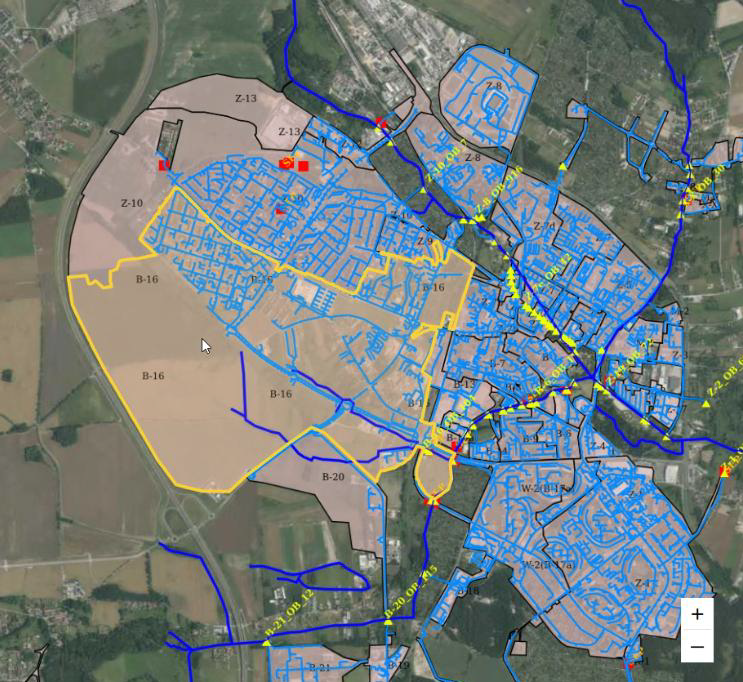
- WaterFolder Connect – a platform enabling the design and verification of stormwater drainage projects using hydrodynamic modelling of drainage systems. Its efficient and user-friendly interface makes it easier to analyse a range of local rainfall scenarios. For public officials, it provides confidence in setting technical conditions for connection to the network.
- PANDa – a platform containing design rainfall intensity data for all 930 cities in Poland. Professional management of urban drainage systems requires current, objective, and reliable rainfall data. That is why we created a comprehensive rainfall map of Poland containing precise data covering a 30-year period.
Our courses
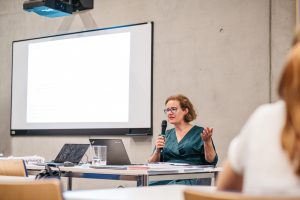
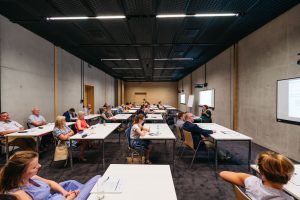
We provide training courses and workshops in the field of stormwater and snowmelt management, with the programme, scope, and duration tailored to the individual needs of each client. Our training sessions are delivered by experts with many years of practical experience, who are eager to share their knowledge, know-how, and insights from everyday practice.

The city gains
- better prepared teams,
- fewer errors at the interface between departments and contractors,
- educational materials that support implementation work.
 Order an educational programme, guidelines, or a workshop tailored to the needs of your city. Our company’s expert in this field is Renata.
Get in touch with us and fill in the form.



FAQ
Why is stormwater education important for cities?
Because even the best investment project will not work well without standards, informed decisions, and a shared understanding of the goal across departments and stakeholders.
Do you prepare guidelines, catalogues, and standards for cities?
Yes. We not only provide training, but also develop municipal standards, solution catalogues, and implementation materials. We also prepare model technical conditions for discharging water into drainage systems.
Which forms of education work best in stormwater management?
Most often these include workshops, webinars, good-practice catalogues, design guidelines, and materials for municipal staff, schools, or residents.